
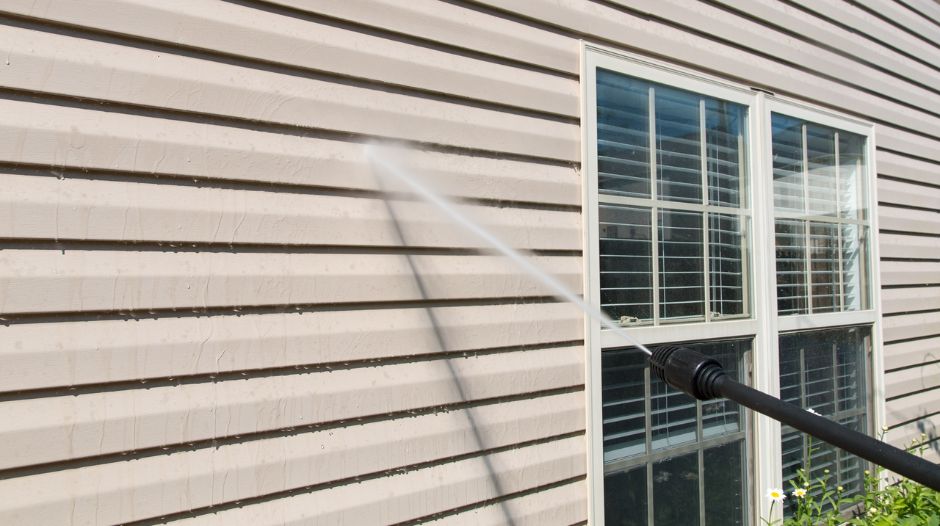
Temperature changes what a pressure washer does to a surface. On a 100-degree afternoon, cleaning solution flashes dry before it can work, and hot surfaces react badly to cold water. Below freezing, water refuses to leave — it sits in mortar joints and on walkways and turns into a hazard.
Knowing what not to power wash in extreme heat or freezing temperatures saves you from cracked surfaces, streaked siding, and cleaning you have to pay for twice. Continue below to learn more from the expert Summerville pressure washing team at Jeff’s Exterior Washing.
Surfaces to Avoid Washing in Extreme Heat
Sun-Baked Siding, Especially Dark Colors
Vinyl and painted siding on a west-facing wall can get far hotter than the air. Hitting that surface with cold water is thermal shock, and older brittle vinyl can crack.
Beyond the risk, cleaning solution evaporates in minutes on a hot wall, so it never gets the dwell time it needs to kill algae. You end up with a streaked, half-cleaned surface.
Windows and Glass
Hot glass and cold water is the same problem, magnified. Direct spray on a sun-heated pane is a real crack risk, and rinse water dries instantly into spots and film.
Painted, Stained, or Aging Wood
Decks, fences, and trim already stressed by UV exposure lose finish faster when cleaned hot and dry. Old paint lifts, and stain dries blotchy after rinsing.
Roofs
Two reasons here. Shingles get very hot and soft in summer sun, and walking or working on them causes granule loss.
Just as important, cleaning solution has to sit on a roof to kill algae and moss. On a baking roof in the middle of the day, it dries before it can do anything. Roof work is done early or on overcast days.
How Professionals Work Around the Heat
Crews start early, work the shaded side of the building, keep surfaces wet ahead of the rinse, and pre-wet landscaping more often.
On the hottest days, some elevations get pushed to the next morning rather than done badly.
Surfaces to Avoid Washing in Freezing Temperatures
Driveways, Walkways, and Steps
Every gallon you put down has to go somewhere. When it does not drain and evaporate, it turns into a sheet of ice across the exact surfaces people walk on.
That is a liability problem for homeowners and a serious one for commercial properties.
Brick, Mortar, and Stone
Water absorbed into masonry expands when it freezes. Repeated freeze-thaw cycles spall brick faces and crumble mortar joints.
Washing right before a freeze forces that process.
Anything at Height
Ladders, roof edges, and wet lifts in cold weather are not worth it.
Outdoor Plumbing and Equipment
Cold snaps are when spigots, backflow devices, and equipment lines freeze. Adding water to that situation causes problems that outlast the cleaning.
What Can Still Be Done in Cold Weather
Mild cold above freezing is often fine, particularly on vertical surfaces that drain and dry fast.
The decision comes down to surface temperature and how long the overnight low is expected to hold — not the calendar.
The Real Cost of Washing at the Wrong Time
Streaking and Uneven Results
Solution that dries before rinsing leaves visible tiger stripes, most obvious on siding and roofs.
Growth That Comes Right Back
Without dwell time, the algae is knocked down, not killed. It returns within a season.
Cracks and Chips
Thermal shock on hot vinyl and glass, plus freeze expansion in masonry, can damage surfaces that would otherwise clean safely.
Slip Hazards
Ice on a walkway or storefront entry after a winter cleaning creates an avoidable safety problem.
Paying Twice
A rushed job usually needs redoing.
If a contractor is willing to wash your house in any condition without mentioning any of this, that tells you something about how the work will go.
When to Schedule Exterior Cleaning Instead
Spring and fall are the easy answers in the Southeast: moderate temperatures, longer dwell times, and surfaces that dry on their own.
Summer work is fine when it is scheduled early in the day, and the crew follows the shade. Winter work is fine on mild, above-freezing days with a dry stretch behind it.
Practical scheduling notes:
- Book house washing work for morning slots in summer
- Save concrete work for days with no hard freeze in the forecast
- Plan roof cleaning for overcast or early-morning conditions
- Schedule commercial properties around foot traffic as well as weather
Frequently Asked Questions
There is no single number because surface temperature matters more than air temperature.
Once siding, glass, or shingles are hot to the touch in direct sun, cleaning should move to a shaded elevation or an earlier time of day.
It should be avoided. Water refreezes on walkways and inside masonry, creating both a slip hazard and freeze-thaw damage. Waiting for a mild day is the right call.
Warmth helps up to a point, then works against you because the solution dries before it has time to kill the growth. Dwell time is what removes algae, not heat.
Spring and fall generally give the best conditions and the most consistent results. Summer works well with early-morning scheduling.
The most common cause is solution drying on the wall before rinsing, usually from working a hot, sunlit elevation in the middle of the day. It can typically be corrected with a proper re-clean.
Schedule Your Wash for the Right Conditions
If you’ve been putting off a house wash, roof cleaning, or driveway job because of the weather, get on the schedule for a window that actually suits the surface.
Tell us which surfaces you need cleaned, and we will slot the work into the right conditions instead of forcing it. Reach out today to pick a date.